Selected work
Projects
Shipped products, quantitative research on crypto markets, and peer-reviewed neuroscience — roughly in reverse chronological order.
Products
Apps I've designed, built, and shipped end to end.
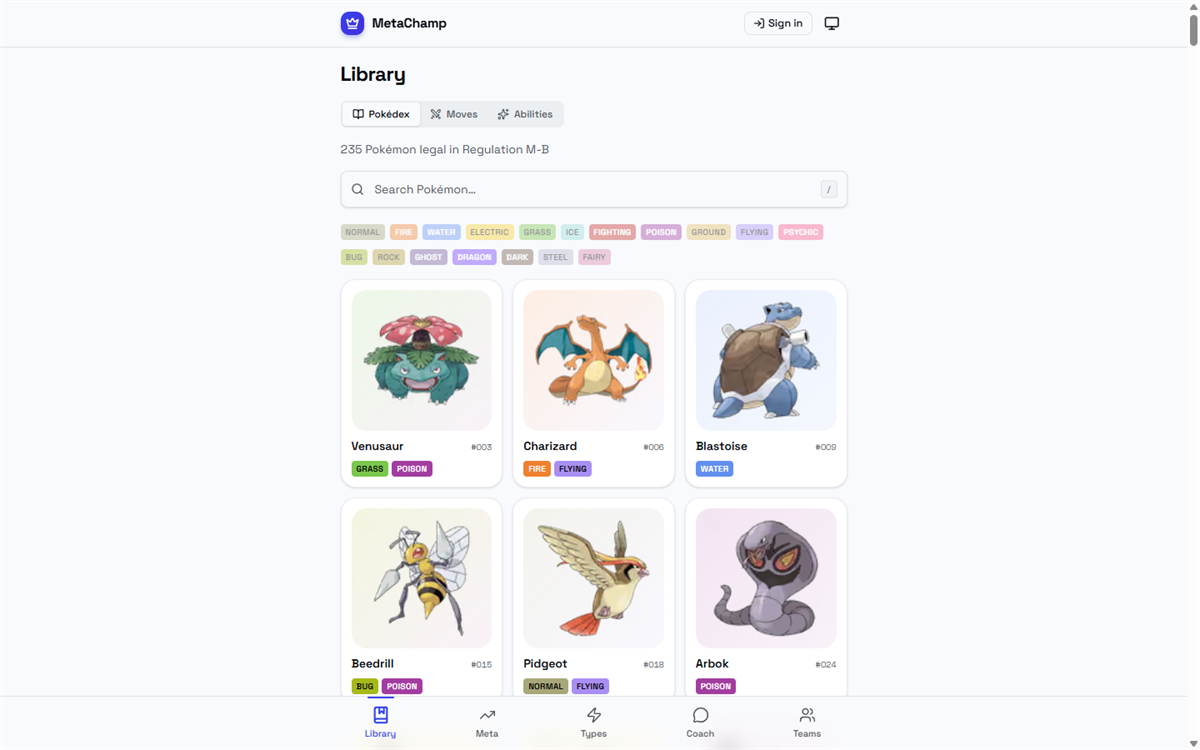
A fully featured app for competitive Pokémon with an AI-powered coach.
metachamp.gg →Read moreShow less
Master the Meta. Become a Champion.
MetaChamp is a companion app for Pokémon Champions VGC — live meta, team builder, and an AI coach. Mobile + desktop. Free tier.

A complete, end-to-end app delivering AI-powered personalized adaptive romantic fiction.
orchidfiction.com →Read moreShow less
Spicy stories that adapt to you.
Orchid crafts personalized romance stories tailored to your tastes — delivered chapter by chapter.
Mobile and desktop. Try for free.
Independent Research
Personal projects in crypto markets — tools, models, and write-ups.
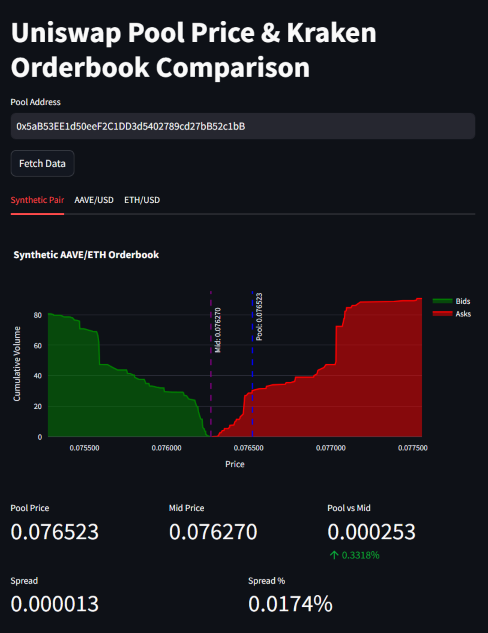
Compare Uniswap pool prices against CEX orderbooks, with a synthetic orderbook for 3-way comparison.
View the dashboard →Read moreShow less
This app lets you compare Uniswap pool prices and CEX orderbooks. It will also create a synthetic orderbook for 3-way comparisons on the CEX.
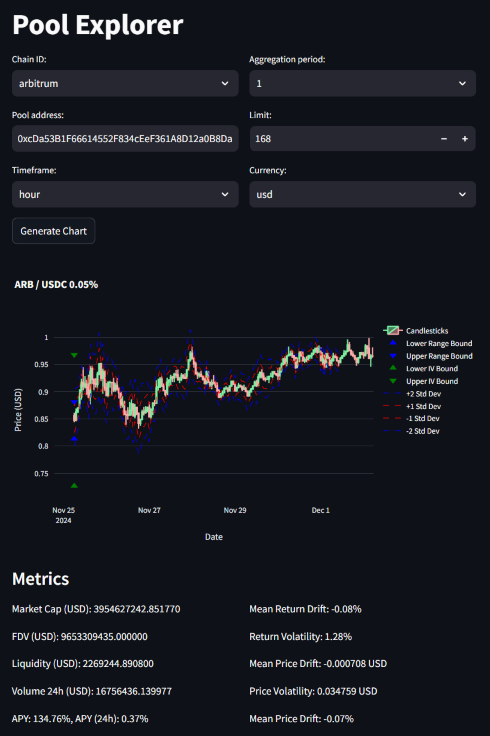
Explore Uniswap V3 pools and compare metrics, with Monte Carlo estimates of implied volatility and expected impermanent loss.
View the app →Read moreShow less
The Pool Explorer App pulls real-time data from several sources, calculates pool metrics, and shows price data for comparison. It also uses Monte Carlo simulations to estimate some advanced metrics like implied volatility and expected impermanent loss. If the trade data for a pool is available, it will also show the distribution of trades and classify the types of flow.
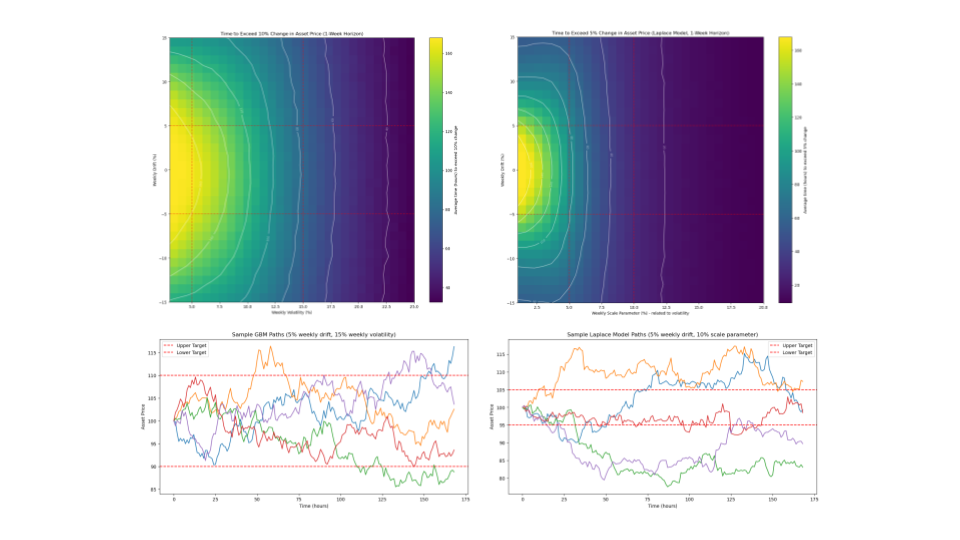
A Laplace distribution captures the expected move for most Uniswap V3 pools better than a Gaussian — and predicts time-in-position from drift and volatility.
Read moreShow less
Modeling the probability of the price moving outside a liquidity provider’s range given a certain drift and volatility is crucial for understanding the risks of LPing and optimizing the range. A Laplace distribution does a better job than a Gaussian at capturing the “expected move” of most LP pools, and simulations show how long we can expect to be in a position given the market dynamics.
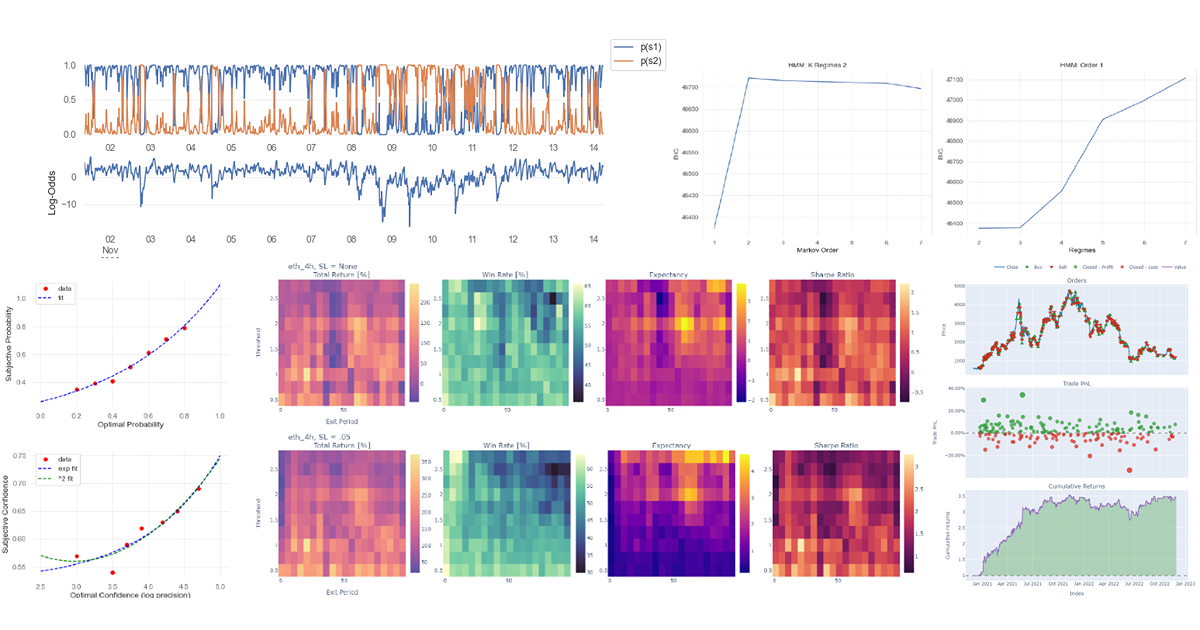
A regime-switching HMM combined with neuroscience data on trader bias to better predict shifts in market dynamics.
Read moreShow less
When there is a shift in the dynamics of the market, good trade opportunities can arise. Market participants have a skewed perception of the probability of a change in market structure (and their confidence in that prediction). By predicting regime changes and accounting for this bias, we can find good entry signals.
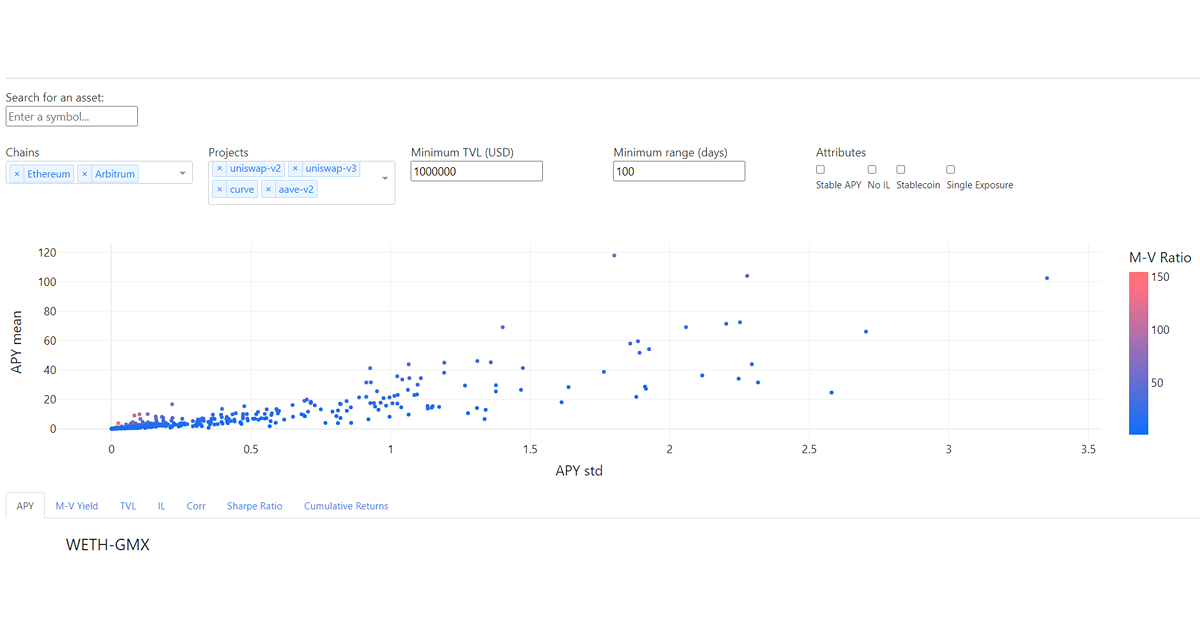
Find opportune DeFi yields by risk-return, track APY, TVL and IL over time, and forecast future yields with ML.
Read moreShow less
The Yield Explorer App pulls real time data from several sources, tracks many metrics, and makes it easy to search for and compare yields based on their risk-return. This is a work in progress (several customizable predictive ML algorithms for LPs are currently being tested).
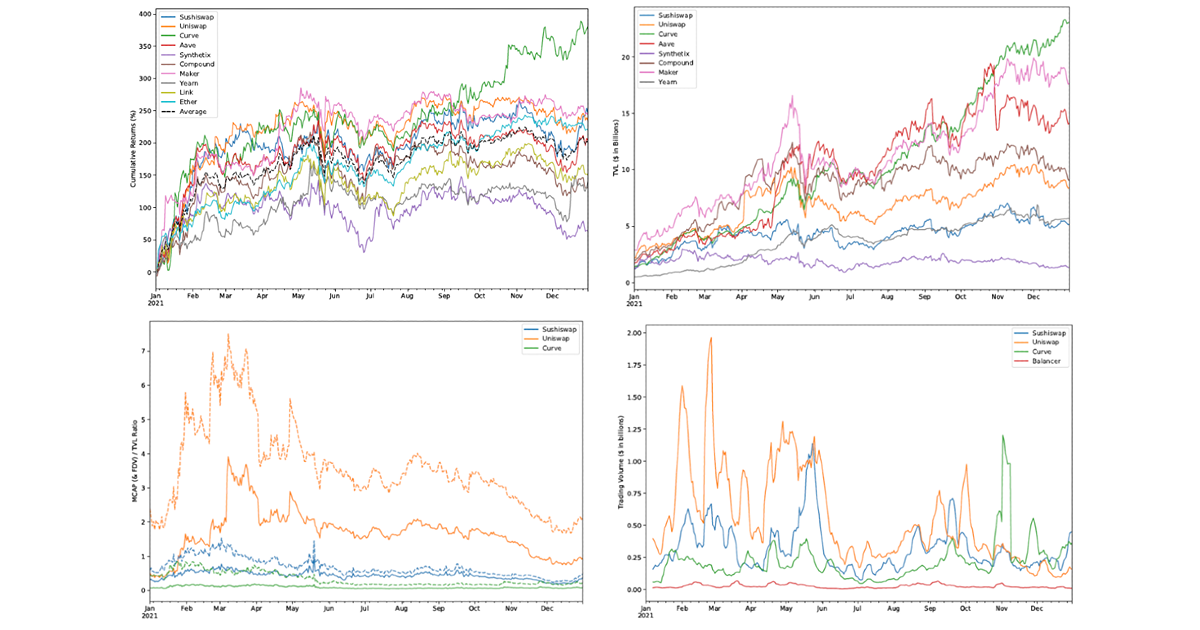
Long-form report on the Sushi protocol in 2021 — historical data, fundamentals, and forward projections.
Read the report (PDF) →Read moreShow less
Given the recent turmoil surrounding Sushi — mismanagement, infighting, and lack of information, it’s time to take a step back and see how it performed in 2021. The future is uncertain for the DAO and the development team, but we can attempt to make a valuation of Sushi given its fundamentals and where it stands in the competitive landscape. How did it compare to the rest of DeFi in 2021 and is it a good investment going into 2022?
Neuroscience
Peer-reviewed work on circuit mechanisms of working memory.
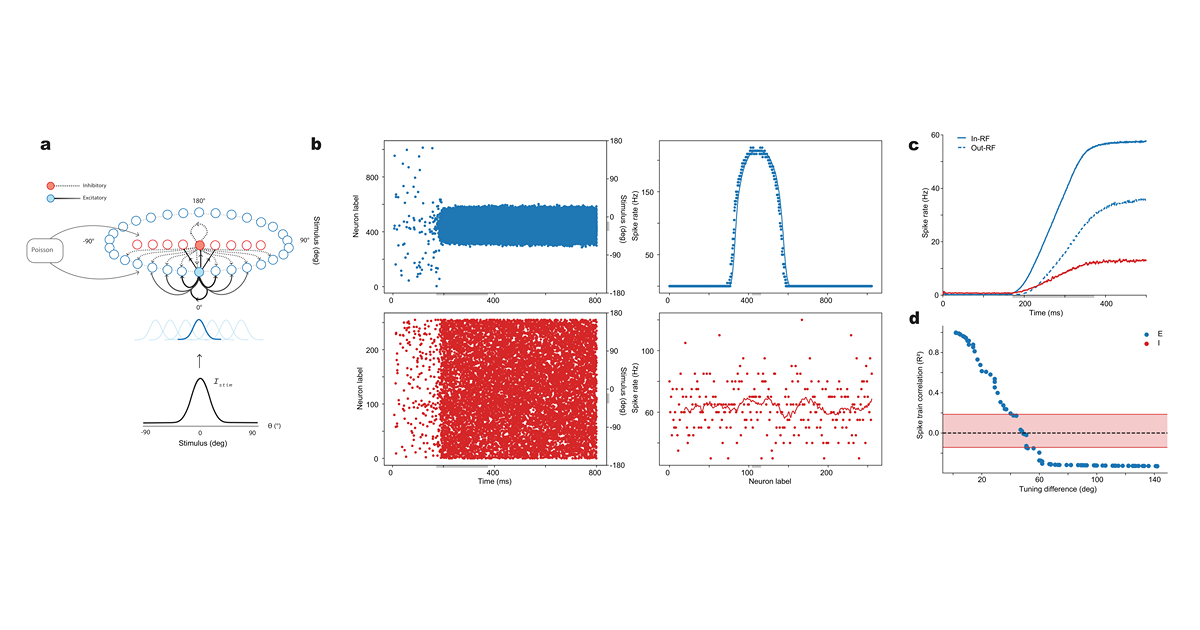
Attractor dynamics underlying persistent stimulus representations, explained by the connectivity profile of excitatory and inhibitory neurons.
Read moreShow less
Attractor networks are often proposed as a model for persistent activity in neural systems that underlie working memory and decision making. These theoretical models rely on the interplay between excitatory and inhibitory neurons to generate and maintain a veridical representation of a stimulus in noisy environments. However, both neurophysiological recording and data analytic limitations have made it difficult to investigate this circuit architecture in the primate. Here, we describe a GLM-based modeling approach which provides a unifying analysis framework to link attractor network theories and recently-published macaque electrophysiological data.
Applying this framework to both spiking data and the theoretical spiking network, we found that the data are inconsistent with default assumptions about the cell-type specific network architecture, but suggest alternate circuit diagrams that are viable. Rather than an indiscriminate “untuned” population of inhibitory cells that is proposed by the standard model, we found that inhibitory connections were stimulus-selective and proportional to excitatory connections, which served to precisely balance the network, rather than indiscriminately dampen the excitation. However, unlike excitatory neurons, inhibitory neurons lacked spatially-selective persistent activity in the traditional sense, identified in their averaged response profiles. Furthermore, the excitatory (but not inhibitory) subpopulation in area LIP displayed spatially selective coupling with other neurons indicative of an attractor network, but this result was not as pronounced in area FEF.
These findings suggest revisions to standard models of persistent activity and reinforce LIP as a locus for attractor dynamics during persistent activity. More generally, this analysis framework can characterize the emergent network dynamics in both data and models which are not necessarily intuitive even for known circuit designs.
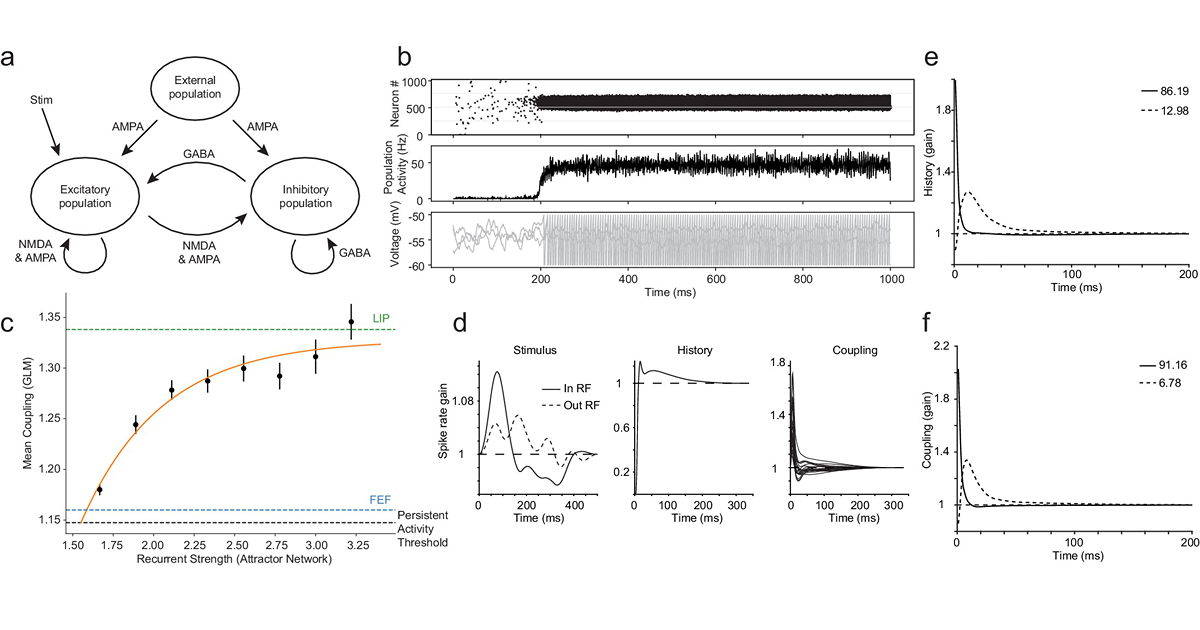
Neural dynamics during working memory map onto theoretical recurrent neural network models.
Read moreShow less
To test popular mechanistic models of persistent activity with multi-region in vivo neural data (LIP & FEF), we fit a population GLM to spiking data from a classical ‘bump’ attractor network used to model spatial working memory. Our main goal was to infer the recurrent connectivity of the attractor network using the GLM and to provide a benchmark to relate the data to the mechanistic models.
We parametrically varied the recurrent connection strength of the excitatory population in the attractor network and generated synthetic datasets that mimicked the real experiment. Both LIP and FEF appear to be independently capable of stable attractor dynamics, whereas the between-area interactions fell below the threshold for independently generating persistent activity, despite significant coupling.
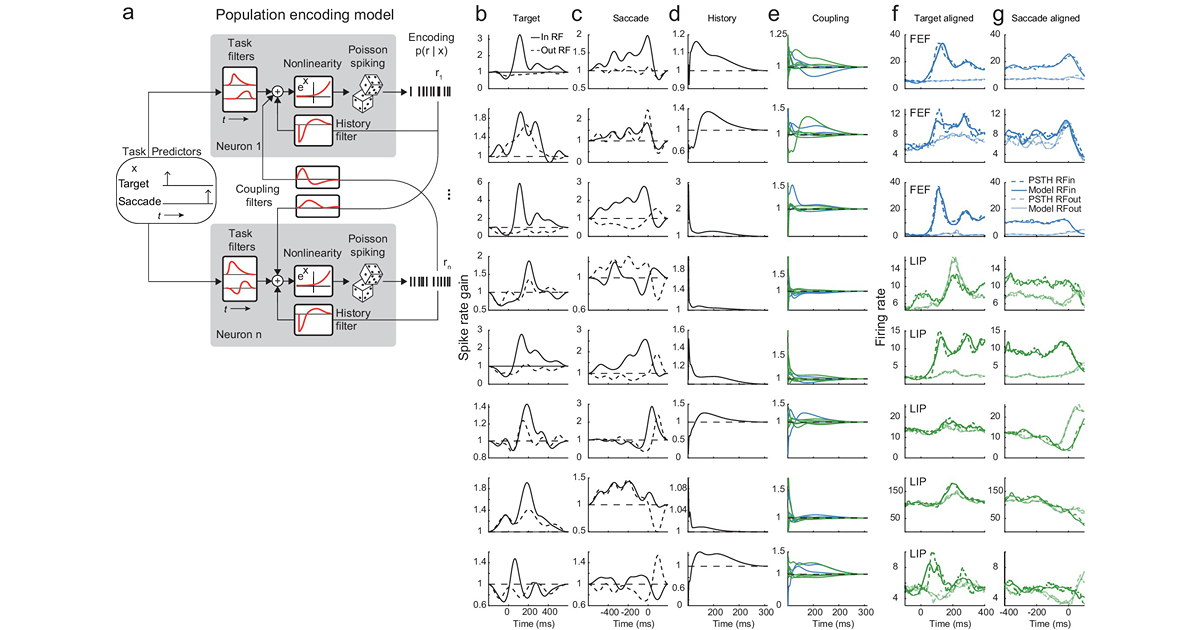
How do networks of neurons maintain information over short time scales?
Hart, E., & Huk, A. C. (2020). *eLife*, 9, e52460.
Read in eLife →Read moreShow less
During delayed oculomotor response tasks, neurons in the lateral intraparietal area (LIP) and the frontal eye fields (FEF) exhibit persistent activity that reflects the active maintenance of behaviorally relevant information. Despite many computational models of the mechanisms of persistent activity, there is a lack of circuit-level data from the primate to inform the theories.
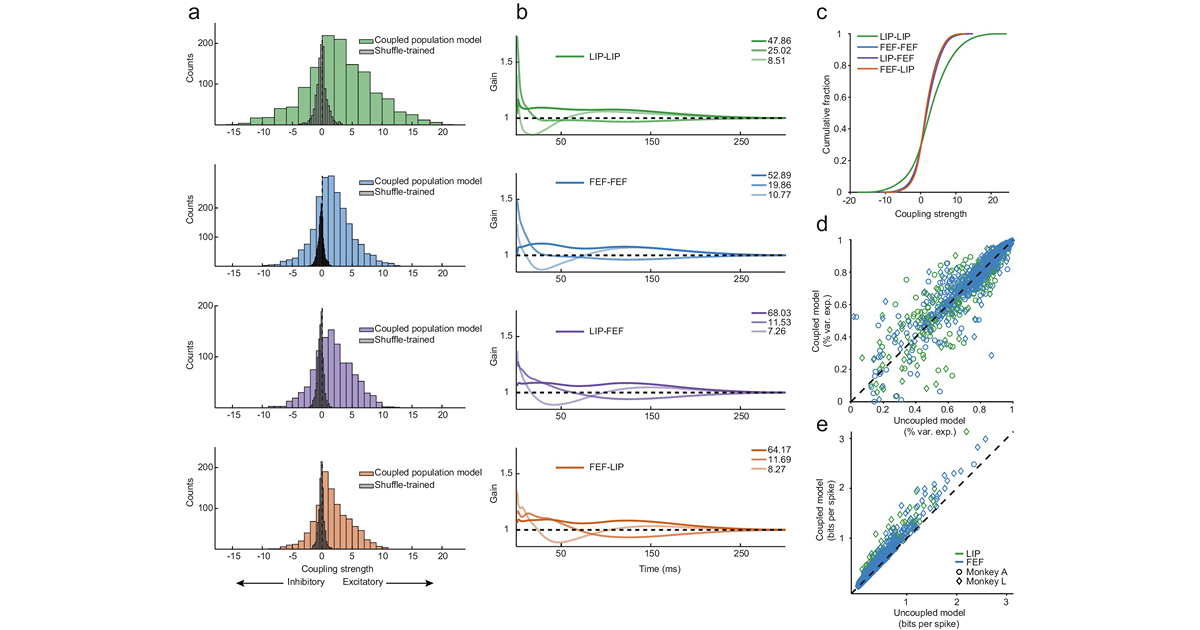
To fill this gap, we simultaneously recorded ensembles of neurons in both LIP and FEF while macaques performed a memory-guided saccade task. A population encoding model revealed strong and symmetric long-timescale recurrent excitation between LIP and FEF. Unexpectedly, LIP exhibited stronger local functional connectivity than FEF, and many neurons in LIP had longer network and intrinsic timescales. The differences in connectivity could be explained by the strength of recurrent dynamics in attractor networks.
These findings reveal reciprocal multi-area circuit dynamics in the frontoparietal network during persistent activity and lay the groundwork for quantitative comparisons to theoretical models.
Doctoral dissertation — how ongoing neural activity between brain regions supports working memory and decision making.
Hart, E. L. (2019). Doctoral dissertation, UT Austin.
Read the dissertation →Read moreShow less
Working memory is the cognitive ability to actively maintain and manipulate information on the timescale of seconds. Neurons in the prefrontal and posterior parietal cortices of the primate brain remain active in absence of sensory input and appear to correlate with working memory. In this thesis, I investigate the mechanisms of persistent activity during working memory in the frontoparietal network of the macaque.
By conducting simultaneous electrophysiological recordings in two of the key regions of this network, the lateral intraparietal area (LIP) and the frontal eye fields (FEF), and employing statistical models of the neural population activity, I characterized the interactions between neurons locally in each area and between these two distant brain regions. In a visuospatial working memory task, during which the subject must remember the spatial location of a target, I found strong recurrent activity on single trials both within and between these areas that was not due to the visual stimulus or the motor response.
The strength and timescale of functional interactions between LIP and FEF were highly reciprocal and symmetrical, providing evidence for the theory that reverberatory activity in this circuit does, in fact, support working memory. However, contrary to current models of the frontoparietal network, area LIP exhibited greater local recurrent excitatory activity than FEF, and many individual neurons in LIP displayed activity on longer timescales. In addition, the concurrent population activity had a greater impact on the spiking activity of most neurons than each individual neuron’s own intrinsic drive, especially in LIP.
This result further emphasizes the role of network mechanisms in generating and maintaining persistent activity. Taken together, these findings suggest revisions to the current models of working memory, and highlight the importance of studying population activity on single trials.
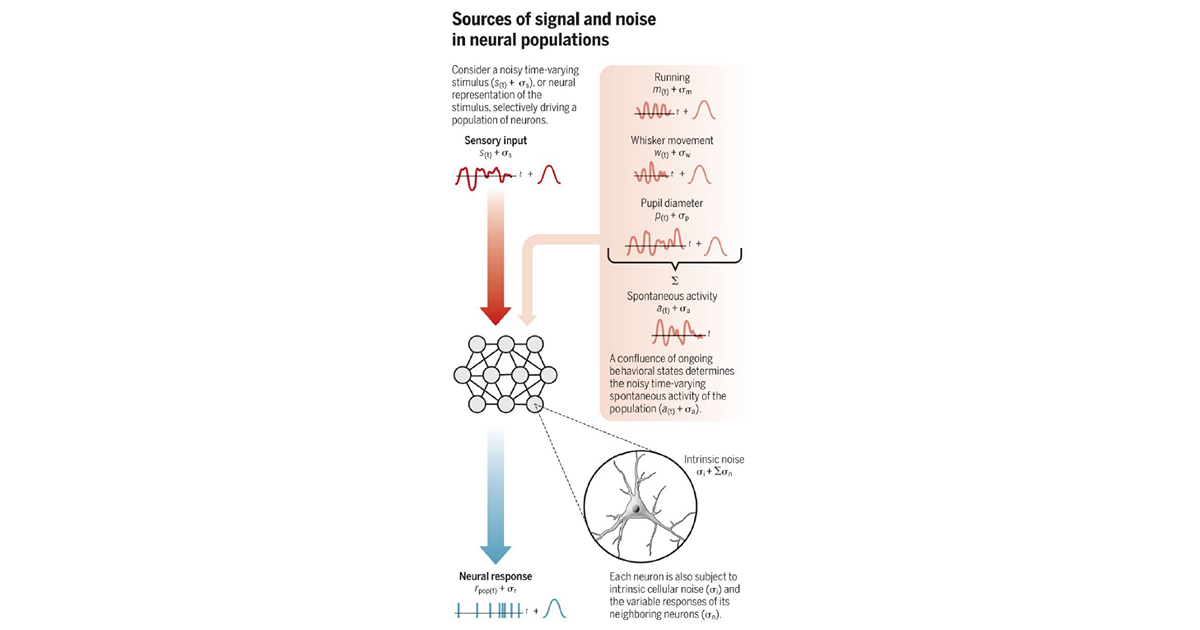
Large-scale neural recordings reveal the sources of noise in the brain.
Huk, A. C., & Hart, E. (2019). *Science*, 364(6437), 236–237.
Read in Science →Read moreShow less
Like engineers who characterize the fidelity of signals flowing through a circuit, neuroscientists focus on quantifying the degree to which neuronal signals are “noisy.” Engineers have the benefit of designing the system and knowing the form of the signal, making identification of corrupting noise relatively straightforward. For neuroscientists, the task is harder, as it entails figuring out first what the signal is, and only then, what the noise is.
Gründemann et al., Allen et al., and Stringer et al. report findings from large-scale neural recordings in the brains of mice and find brainwide activity that correlates with behavior that might usually be ignored as noise. These studies prompt reconsideration of the origin and impacts of “noise” in the nervous system.